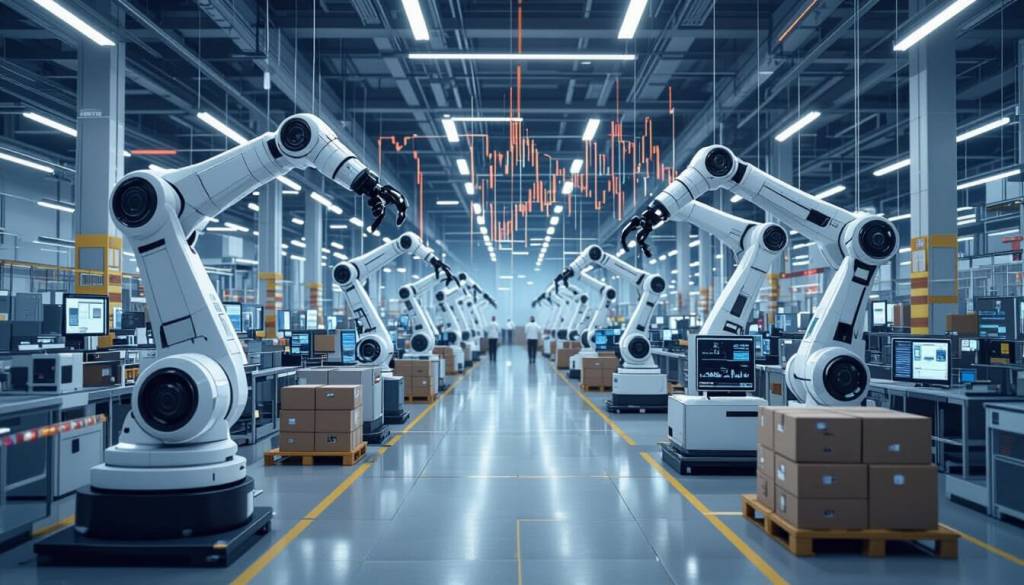
The AI-Driven Path to Universal Basic Income: A Realistic Scenario
Universal basic income (UBI) has been a political thought experiment for years. Interesting to debate, fun to imagine, and tempting for futurists to model. But I’ve never been convinced we were anywhere near implementing it.
Until recently.
The sudden acceleration of AI has changed the tone of the conversation. We’re no longer speculating about automation someday replacing certain jobs. We’re watching AI systems actively replace real tasks right now; writing, coding, designing, marketing, customer support, accounting, logistics, content creation, and dozens of cognitive jobs we used to assume were uniquely human.
That doesn’t mean UBI is showing up next week. It’s not about today. It’s about the structural pressure that builds as more jobs disappear without obvious replacements.
What I’m describing here isn’t a prediction. It’s a scenario, US-centricc, one possible way the next few years could unfold if AI continues accelerating at its current pace.
Why AI Is Different From Every Previous Automation Cycle
In the industrial age, technology eliminated physical labor. Machines replaced factory workers, farmhands, ditch diggers, train crews, and railroad craftsmen.
But new jobs always opened up:
- clerical work
- office administration
- managers and supervisors
- retail and sales
- education and training
- financial and legal services
- knowledge work and creative labor
Humans kept moving upward, away from physical labor and into cognitive labor.
But AI is automating the destination, not the ladder. It’s not replacing muscle. It’s replacing thought.
AI performs:
- writing, editing, and market research
- bookkeeping and analysis
- design and layout
- operations and logistics
- translation and language support
- customer service
- content categorization
- legal drafting and contract review
Not one industry. Many industries. At the same time.
And once AI can perform a job, it can scale millions of times faster than humans.
This doesn’t require conspiracy, political ideology, or utopia.
It just takes efficiency incentives.
Employers don’t need to fire workers out of cruelty. They simply won’t rehire or replace them. Departments shrink through attrition. Workloads move to AI without fanfare. Jobs quietly disappear.
That’s the pattern to watch.
Not a dramatic “robot apocalypse” but millions of jobs evaporating gently over time, like fog.
Why UBI Could Become Necessary Sooner Than Expected
I don’t think the U.S. is close to universal basic income in the political sense. We aren’t passing sweeping UBI legislation tomorrow or next quarter.
But I do think we could enter a five-year window where UBI becomes a forced solution to stabilize large-scale displacement.
Not because politicians suddenly agree on the philosophy.
But because the math leaves no alternative.
If a recession or market contraction hits at the same time AI eliminates massive swaths of administrative, cognitive, and service jobs, we could simply run out of employment that humans can perform competitively.
When that happens, the government has two choices:
- Allow millions of Americans to slide into permanent poverty and homelessness, or
- Guarantee enough income to keep society stable and functional
UBI stops being a philosophy and becomes a pressure valve.
A survival mechanism.
Not utopia, triage.
It Won’t Start as a National Program
This is the part almost everyone gets wrong.
UBI will not begin as a universal, all-at-once rollout.
That is politically, administratively, and financially impossible.
What’s far more realistic is a phased approach:
- first low-income households
- later displaced workers
- much later the broader middle class
Why start at the bottom?
Because that’s where the infrastructure already exists:
- SNAP
- Medicaid
- Section 8
- SSI
- TANF
- EBT payment systems
- income verification databases
- identity systems
- fraud detection networks
These bureaucracies already know how to distribute benefits monthly, authenticate identity, and audit fraud. So expanding baseline income inside existing programs is the path of least resistance.
It doesn’t require reinventing the entire machine, just modifying it.
The Middle Class Will Have to Wait
This might be the quiet political bomb buried inside the UBI debate.
Middle-class workers are not inside the welfare infrastructure. They’re not tied into existing identity and eligibility systems. They don’t receive government payments, so there’s no administrative pipeline to route money to them.
Creating that pipeline could take years.
Which means: the people who need UBI first might not receive it first.
For a while, millions of displaced workers might stand outside the system, waiting for eligibility, paperwork, verification, or legislative expansion.
That delay could trigger a period of serious economic distress:
- housing insecurity
- rising crime
- informal or tribal economies
- community breakdown
- pressure on food banks and shelters
- migration from cities to rural or semi-communal zones
- mental health decline from loss of identity and income
Traditional unemployment benefits won’t fix this.
Unemployment systems were built for temporary layoffs, not permanent job category extinction.
A displaced accountant with no replacement sector can’t “return to work” in six months when the job no longer exists anywhere.
Unemployment eventually expires.
UBI eligibility might not exist yet.
That gap is the danger zone.
Where Does the Money Come From?
This is the most politically volatile piece of the entire puzzle.
UBI is expensive, even at modest levels.
And unless the economy expands dramatically (unlikely during displacement shock), the government may be forced to cannibalize existing entitlement programs.
The most obvious target: Social Security trust funds.
I’m not saying this will happen.
I’m saying it’s a realistic scenario if a financial crisis forces rapid stabilization.
Politicians under pressure don’t create entirely new revenue streams; they reallocate from existing ones.
A crisis-era Congress could:
- fold Social Security and certain welfare programs into a unified baseline income system
- rebrand Social Security as “senior UBI”
- gradually expand younger eligibility downward as unemployment grows
- consolidate disability, SNAP, and other programs into a simplified survival architecture
Over time, the line between traditional welfare, Social Security, and UBI would blur until they effectively become pieces of the same structure.
This is how bureaucracies evolve under pressure.
Not through ideology, but through necessity.
Digital UBI Means Digital Survival
Now the second major structural shift:
If millions of people receive UBI monthly, the distribution almost certainly becomes digital, not physical.
Cash is unsafe and unmanageable.
Checks are easy to steal or forge.
Debit cards can be stolen and PINs coerced.
Phones can be hacked.
Fraud would explode overnight.
So we end up with:
- digital payments
- digital identity
- biometric authentication
Not because of conspiracy.
Because of security math.
The only way to stop theft is to verify identity at the point of access.
That means:
- fingerprint
- face scan
- retinal scan
- or something similar
From a fraud-prevention standpoint, there’s simply no other option at scale.
And once survival is tied to digital identity… …the administrative layer becomes extraordinarily powerful.
Not politically powerful; functionally powerful.
The system that controls access to survival money becomes de facto governance, even if nobody intended it.
Again, not dystopia.
Just infrastructure.
AI Administration Becomes Inevitable
You cannot manage:
- digital identity
- eligibility
- fraud detection
- biometric access
- housing instability
- regional tribalization
- displaced worker onboarding
- public safety modeling
- real-time distribution
…with human bureaucracy alone.
Administrative AI becomes required.
Not totalitarian, just necessary.
A national UBI system would need automated:
- verification
- fraud analysis
- account monitoring
- rule enforcement
- emergency protocols
- eligibility adjustments
That means access becomes conditional, the same way your bank can freeze an account or your passport can be suspended.
Except this time, conditionality affects basic survival rather than discretionary privileges.
That is a massive psychological shift.
Not ideological.
Structural.
The Tribalization Nobody Is Talking About
If UBI is too low to afford secure housing, say $1,000 to $1,500 a month, many people will end up living communally, semi-communally, or in improvised clusters for safety and cost-sharing.
Call them:
- micro-communities
- compounds
- vehicle villages
- semi-permanent encampments
- rural enclaves
- abandoned commercial districts
- repurposed housing
- localized informal authority zones
Humans don’t handle insecurity alone.
They form protection clusters.
Some might be gentle.
Some might become predatory.
Think less “Mad Max” and more “Katrina rules,” except distributed nationally and lasting indefinitely.
Even peaceful communities will look like tribes, built around shared resources and mutual survival.
Not because people want to rebel.
Because they need stability, safety, and belonging when central systems can’t provide it.
This tribal structure emerges anywhere central authority loses reach, history shows it over and over.
The Real Risk Isn’t UBI, It’s Lag
The danger isn’t the existence of UBI.
The danger is the administrative gap between displacement and eligibility.
A slow bureaucracy plus fast unemployment equals:
- desperation
- housing collapse
- crime
- informal economies
- addiction
- tribal power dynamics
- political fragmentation
UBI might eventually calm all that down.
But the transition period could be incredibly unstable.
That’s the part policymakers are not thinking about: the speed of AI displacement versus the speed of government response.
We don’t have decades to redesign the system if displacement accelerates.
We might have five years.
Or three.
Or eight.
We don’t know.
That’s why this is a scenario, not a prophecy.
What We Should Be Thinking About Now
If UBI becomes necessary, we need to design:
- decentralized identity systems
- privacy-preserving authentication
- behavior-independent access rights
- localized safety architecture
- redundancy for system outages
- ethical oversight for administrative AI
- transition planning for displaced workers
- financial buffers during eligibility lag
- protections for seniors if Social Security is restructured
The time to think about dignity, autonomy, and psychological stability is before the system hardens.
Afterwards, the architecture becomes difficult to unwind.
Infrastructure has inertia.
Once survival runs through a digital pipe, the pipe becomes governance.
Not tyranny.
Just administration elevated to sovereignty.
Final Thought
I don’t know if this exact scenario will happen.
But something along this spectrum is plausible if AI continues shrinking the labor market faster than governments can adapt.
UBI doesn’t scare me.
What scares me is a chaotic transition period where millions of displaced workers wait for bureaucracy to catch up.
That’s when society becomes unstable.
That’s when tribal security clusters emerge.
That’s when access systems become the new authority.
That’s when autonomy is negotiated through infrastructure instead of income.
UBI is not utopia.
It’s a stabilizer in a world where work may no longer be the default way to survive.
And we should start thinking about the architecture now, not after a crisis forces a reactive, improvised rollout.
Because once a system becomes the gatekeeper for survival…it rarely gives up that role voluntarily.
Not through malice.
Through momentum.





 Blood and circuitry
Leave a reply to shredbobted Cancel reply