CBD Oil: Miracle, Myth, or Marketing Machine?
By Blood And Circuitry
CBD Oil: Benefits, Risks, and Everything You Need to Know
CBD oil has become one of the most talked-about natural wellness products in the past decade. Some people claim it helps with anxiety, pain, and sleep. Others believe it is mostly hype. The truth lies somewhere in between.
This guide explains the real benefits and risks of CBD oil, the different types (full spectrum, broad spectrum, and isolate), and the various ways people use it. We will also explore what science says compared to anecdotal reports and offer tips for choosing the right product.
If you want a single reference article on CBD oil that covers all the essentials, this is it.
A Brief History of CBD
CBD is not new. Hemp and cannabis have been used for thousands of years in traditional medicine across cultures. Ancient Chinese texts mention cannabis for pain relief. In 19th-century Europe and America, cannabis extracts were common in tinctures sold in pharmacies.
The specific study of CBD began in the 1940s when scientists first isolated cannabidiol from cannabis. For decades it remained obscure because THC drew most of the attention. In the 1990s, researchers discovered the endocannabinoid system in the human body, which sparked renewed interest.
By the 2010s, CBD gained popularity as anecdotal reports spread about its potential benefits for relieving the effects of epilepsy and anxiety. Legalization of hemp in the United States under the 2018 Farm Bill made CBD widely available, and the global market has grown rapidly ever since.
The Different Types of CBD Oil
Full Spectrum CBD Oil
Full spectrum CBD oil contains cannabidiol along with other cannabinoids, terpenes, and flavonoids from the plant. It also includes trace amounts of THC, usually below 0.3 percent. Supporters believe in the “entourage effect,” meaning all compounds work together for stronger effects.
Pros: More natural, potentially more effective due to synergy.
Cons: Trace THC may show up on a drug test.
Broad Spectrum CBD Oil
Broad spectrum oil is similar to full spectrum, but the THC is removed. It still contains other cannabinoids and terpenes.
Pros: Offers entourage effect without THC.
Cons: Still more processed than full spectrum.
CBD Isolate
CBD isolate is pure cannabidiol with no other plant compounds. It is often sold as crystals or powder and blended into oils or capsules.
Pros: Zero THC, safe for drug testing.
Cons: Lacks the synergy of other cannabinoids and may feel less effective.
How Does CBD Oil Work?
CBD interacts with the body’s endocannabinoid system (ECS), a network of receptors and enzymes that helps maintain balance in functions such as mood, sleep, pain, and immune response. The two main receptors are CB1, found mostly in the brain, and CB2, found in the immune system and tissues.
THC binds directly to CB1 receptors, creating the classic cannabis high. CBD does not bind in the same way. Instead, it influences how receptors respond to other signals, increases natural endocannabinoids in the body, and interacts with serotonin and TRPV1 receptors involved in mood and pain.
This explains why CBD is being researched for anxiety, inflammation, seizures, and many other conditions.
Benefits of CBD Oil
1. CBD for Anxiety and Stress
- Research: Studies suggest CBD may reduce social anxiety and promote calmness by affecting serotonin receptors.
- Real Results: Users often describe CBD as helping them manage day-to-day stress without feeling sedated.
2. CBD for Pain and Inflammation
- Research: Evidence shows CBD may help with arthritis, nerve pain, and inflammation. It is even used in the prescription medicine Sativex (which combines CBD and THC) for multiple sclerosis pain.
- Real Results: People with chronic back pain or sore joints frequently say CBD makes daily activities more bearable.
3. CBD for Sleep
- Research: Some studies show CBD improves sleep quality, especially for people whose insomnia is linked to anxiety.
- Real Results: Many users say CBD helps them fall asleep faster and stay asleep longer, though others find it stimulating at lower doses.
4. CBD for Skin Health
- Research: Topical CBD may reduce acne by lowering inflammation and oil production. It is also studied for eczema and psoriasis.
- Real Results: Creams and balms with CBD are popular for soothing irritated skin and calming redness.
5. CBD for Epilepsy
- Research: The strongest evidence for CBD comes from epilepsy treatment. Epidiolex, an FDA-approved medication made from pure CBD, reduces seizures in rare conditions such as Dravet syndrome.
- Real Results: Parents of children with severe epilepsy often describe CBD as life-changing.
Risks and Drawbacks of CBD Oil
Even though CBD is considered safe, there are potential downsides.
- Inconsistent Quality: Not all CBD products are accurately labeled. Some contain less CBD than advertised or unexpected levels of THC.
- Side Effects: The most common include fatigue, dry mouth, diarrhea, and appetite changes. At higher doses, some users report dizziness or changes in mood.
- Drug Interactions: CBD can interfere with how the liver processes medications. This may increase or decrease the strength of drugs such as blood thinners, seizure medications, and antidepressants.
- Safety in Special Groups: Research in children, pregnant women, and elderly adults is limited. Use should always be discussed with a doctor.
- High Cost: Quality CBD oil can be expensive, especially if used daily.
- Unknown Long-Term Effects: More research is needed on daily use over many years.
Pros and Cons at a Glance
| Pros | Cons |
| May reduce anxiety and stress | Quality control is inconsistent |
| Can help with pain and inflammation | Possible side effects such as fatigue or digestive issues |
| May improve sleep | Can interfere with prescription medications |
| Supports skin health | High cost for consistent use |
| FDA-approved use for epilepsy | Long-term safety still unknown |
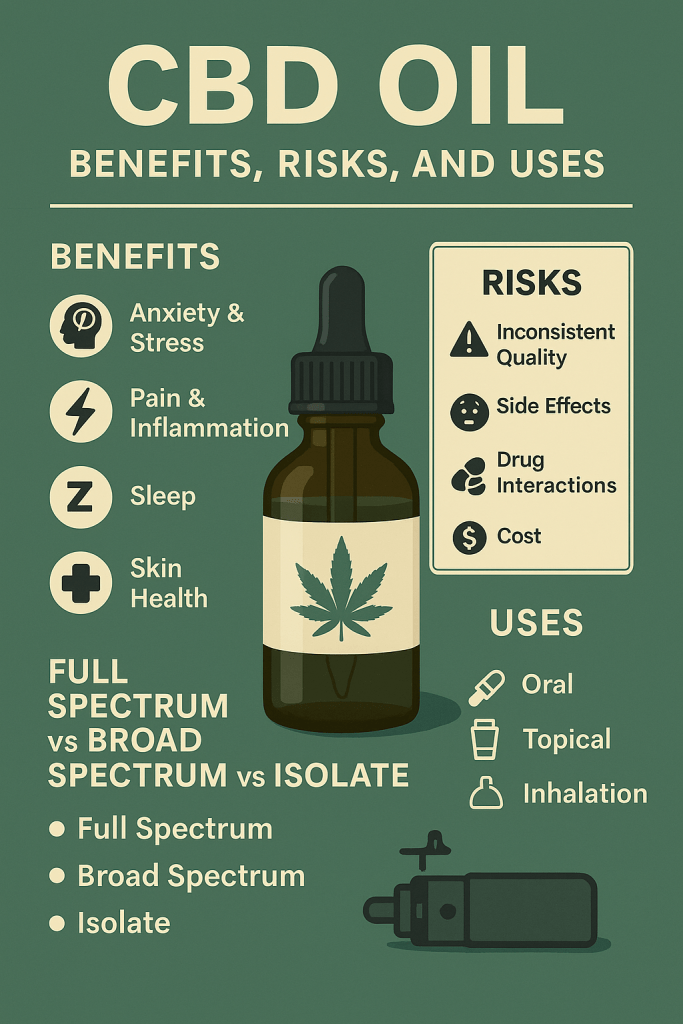
Ways to Use CBD Oil
Oral Use
- Tinctures and Oils: Taken under the tongue for fast absorption.
- Capsules and Edibles: Convenient, slower onset, but effects last longer.
- CBD Gummies and Drinks: Trendy and easy to use, but often contain smaller doses.
Topical Use
- Creams, Balms, Lotions: Applied directly to sore muscles, joints, or irritated skin. Effects are localized and do not enter the bloodstream.
Inhalation
- Vaping or Smoking CBD: Provides the fastest effects but carries risks for lung health.
Real Results: Science vs Anecdotes
- What Science Says: There is strong evidence for epilepsy, growing evidence for anxiety, pain, and sleep, and promising early research on skin conditions.
- What Users Say: Many people describe CBD as a game-changer for managing stress, improving sleep, or easing chronic pain. Others report no noticeable effect at all.
CBD appears to be highly individual. Results depend on body chemistry, dosage, and product quality.
Consumer Guide: How to Choose CBD Oil
Choosing the right CBD product is confusing because the market is crowded and not all companies are honest.
How to Read a Label:
- Look for the total CBD content in milligrams, not just “hemp extract.”
- Check the serving size and dosage.
- Confirm whether it is full spectrum, broad spectrum, or isolate.
How to Avoid Scams:
- Be wary of products that promise miracle cures.
- Avoid oils with no third-party testing.
- Steer clear of vague labels like “hemp oil” that do not list CBD content.
Third-Party Testing:
A trustworthy product will have a Certificate of Analysis (COA) from an independent lab. The COA confirms CBD levels, checks for THC, and tests for pesticides or heavy metals.
Anecdotal Case Studies
- Anxiety Relief: A college student with social anxiety reports using a few drops of CBD oil before presentations and finding it easier to speak without feeling overwhelmed.
- Chronic Pain: A 55-year-old with arthritis describes less joint stiffness after applying CBD balm daily. While not pain-free, mobility improves noticeably.
- Sleep Issues: A young professional with insomnia says CBD gummies taken in the evening help reduce racing thoughts and lead to more restful nights.
These examples are not scientific proof but show how people incorporate CBD into daily life.
The Legal Status of CBD
In the United States, hemp-derived CBD with less than 0.3 percent THC is legal under federal law. However, state laws vary. Some states restrict sales to licensed dispensaries, while others allow CBD in grocery stores and gas stations.
International laws differ even more. In some countries, CBD is sold freely, while in others it is restricted as a controlled substance. Travelers should always check local regulations before carrying CBD across borders.
The Future of CBD Research
CBD continues to be studied for potential benefits in areas such as:
- Neuroprotection for Alzheimer’s and Parkinson’s
- Addiction treatment, including nicotine and opioid withdrawal
- Mood disorders such as depression
- Autoimmune conditions like rheumatoid arthritis
The cosmetic and wellness industries are also expanding CBD use into skincare, beverages, and nutritional supplements. At the same time, governments are working to regulate labeling and ensure safety.
Comparison With Alternatives
- CBD vs THC: THC provides stronger pain relief for some conditions but causes intoxication. CBD is non-intoxicating and may be safer for daily use.
- CBD vs Over-the-Counter Painkillers: CBD may reduce inflammation without the gastrointestinal risks of NSAIDs like ibuprofen, although research is still early.
- CBD vs Herbal Remedies: Plants like valerian root or chamomile also support sleep and relaxation. CBD works differently through the endocannabinoid system, making it complementary rather than redundant.
Final Thoughts
CBD oil is not a miracle cure, but it is not a scam either. It has clear benefits for conditions such as epilepsy, anxiety, pain, and sleep. At the same time, it has drawbacks including cost, inconsistent quality, and limited long-term data.
For some, CBD is a daily supplement that improves quality of life. For others, it may feel like an expensive placebo. The best approach is to start cautiously, use high-quality products, and keep expectations realistic.
CBD oil has earned its place as one of the most intriguing natural supplements of our time, and the science behind it is only just beginning to unfold.




 Blood and circuitry
Leave a comment